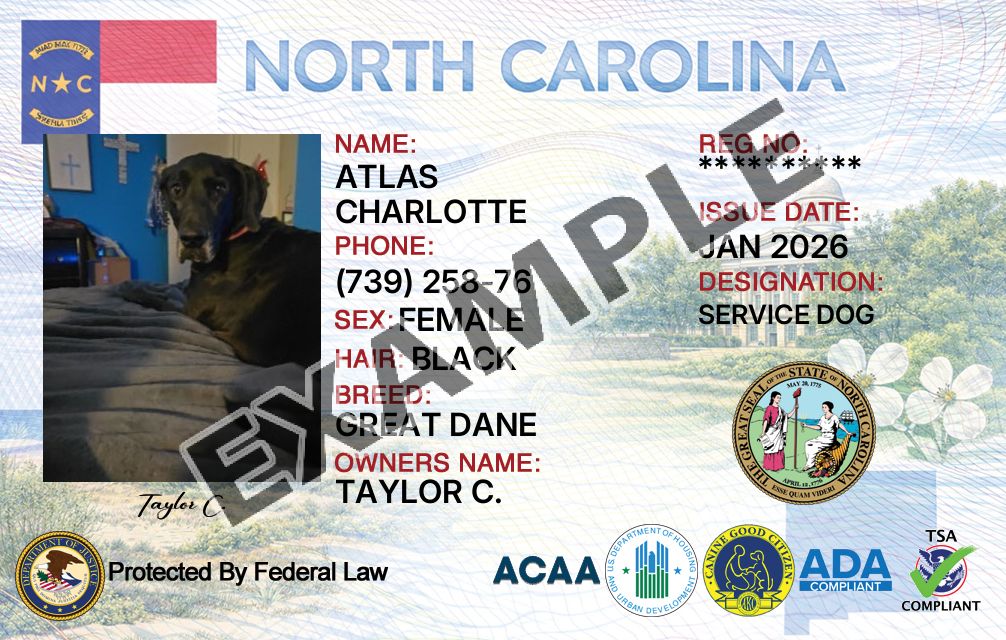
Where Do I Register My Dog in Cumberland County, North Carolina for My Service Dog or Emotional Support Dog?
If you’re searching for where to register a dog in Cumberland County, North Carolina—especially when the dog is related to a disability as a service dog or an emotional support animal—it helps to separate three different topics that often get mixed together: (1) local dog licensing or “pet privilege” licensing, (2) rabies vaccination compliance, and (3) disability-related status under state and federal laws.
Important: “Registration” Means Different Things
In Cumberland County, a dog license in Cumberland County, North Carolina (or any animal control licensing program) is typically tied to rabies vaccination records and local ordinance enforcement. A dog does not become a service dog or ESA by paying a licensing fee or buying a tag. Service dog status is based on training and the handler’s disability-related need, while ESA status is based on clinical documentation for housing situations.
Where to Register or License Your Dog in Cumberland County, North Carolina
Because licensing and rabies enforcement are handled locally, the offices below are common starting points for animal control dog license Cumberland County, North Carolina questions, rabies compliance, and related enforcement. These listings are official local government offices within Cumberland County.
Cumberland County Animal Services
| Address | 4704 Corporation Drive, Fayetteville, NC 28306 |
|---|---|
| Phone | 910-321-6852 |
| Not listed on the office contact section | |
| Office Hours | Not listed on the main Animal Services page |
| What they handle | Animal control services, shelter operations, and (historically) pet licensing/privilege licensing administration. |
Tip: If you’re trying to determine whether a local fee/tag program is active today, Animal Services is the most direct office to confirm current rules for Cumberland County residents.
Cumberland County Department of Public Health — Environmental Health Division
| Address | 1235 Ramsey St, Fayetteville, NC 28301 |
|---|---|
| Phone | 910-433-3667 |
| Not listed on the rabies clinics page contact section | |
| Office Hours | Not listed on the rabies clinics page |
| What they handle | Rabies-related public health information, rabies vaccination clinic guidance, and health-related rabies enforcement support. |
This office is a strong contact if your main need is rabies compliance, rabies exposure questions, or clinic scheduling information.
Why only a few offices?
Official county pages provide clear contact details for Animal Services and Environmental Health in Cumberland County. If you live inside a municipality (for example, within certain city limits), additional city-level animal control processes may apply—so it’s still worth calling Animal Services first to confirm the correct jurisdiction for your address.
Overview of Dog Licensing in Cumberland County, North Carolina
Is a “dog license” required in Cumberland County?
Historically, Cumberland County operated a local “pet privilege license” program tied to rabies vaccination records and administered through Animal Control/Animal Services and participating veterinarians. County communications have also indicated changes over time, including periods where pet licenses were discontinued. In other words, whether you must purchase a local license tag can depend on the current county ordinance and its enforcement status.
If your question is specifically “where do I register my dog in Cumberland County, North Carolina for my service dog or emotional support dog”, the practical answer is: you should start with Cumberland County Animal Services to confirm what local licensing/registration (if any) applies today, and what documentation is accepted for compliance.
Rabies rules still apply even if licensing rules change
Separate from any local dog licensing fee or tag, Cumberland County public health information emphasizes that North Carolina law requires rabies vaccination for dogs and cats over four months of age. In addition, Cumberland County public health materials describe local expectations for staying properly immunized and note potential penalties for non-compliance. This is why “registration” often ends up being about proving rabies vaccination rather than proving service dog or ESA status.
Quick definitions (plain English)
- Dog license / pet privilege license: A local government program that may require a fee and/or record entry tied to rabies vaccination and ownership information.
- Rabies vaccination compliance: A legal public health requirement; you typically prove compliance with a rabies certificate and tag issued by a veterinarian.
- Service dog status: A disability-related status based on what the dog does (trained tasks) and the handler’s disability-related need—not on a county “registration.”
- Emotional support animal (ESA): A housing-related concept supported by clinical documentation; ESAs generally do not have public-access rights like service dogs.
How Dog Licensing Works Locally in Cumberland County, North Carolina
1) Determine your jurisdiction (county vs. city limits)
Licensing and enforcement can be handled at the county level, the city level, or through a combination of agencies. In Cumberland County, Animal Services is a central point of contact, but some rules can depend on whether you live in an incorporated area. If you’re unsure, call Animal Services with your address and ask which rules apply to you.
2) Get (and keep) rabies vaccination current
Your veterinarian typically provides a rabies certificate and a rabies tag after vaccination. Cumberland County public health guidance explains a common vaccination schedule pattern (initial series and boosters). Keep a copy of the certificate in your records, because it is often the single most important document for reclaiming a dog, proving compliance, or completing any local licensing steps.
3) Ask Animal Services what “registration” currently means
When residents ask where to register a dog in Cumberland County, North Carolina, they usually mean one of these:
- Local license/privilege license: whether a county fee/tag is required and how to purchase it (if currently active).
- Rabies enforcement compliance: what to do if you moved in, adopted recently, or missed a booster.
- Owner identification: what identification is recommended or required (tag, microchip, etc.).
4) Keep ID on the dog (tag and/or microchip)
Even when a county license fee is not required, having a collar tag (and ideally a microchip) can make a major difference if your dog is found. If your dog is a working service dog, reliable identification also reduces delays and misunderstandings during stressful situations like a lost-dog pickup.
Service Dog Laws in Cumberland County, North Carolina
Service dogs are not “certified” by the county
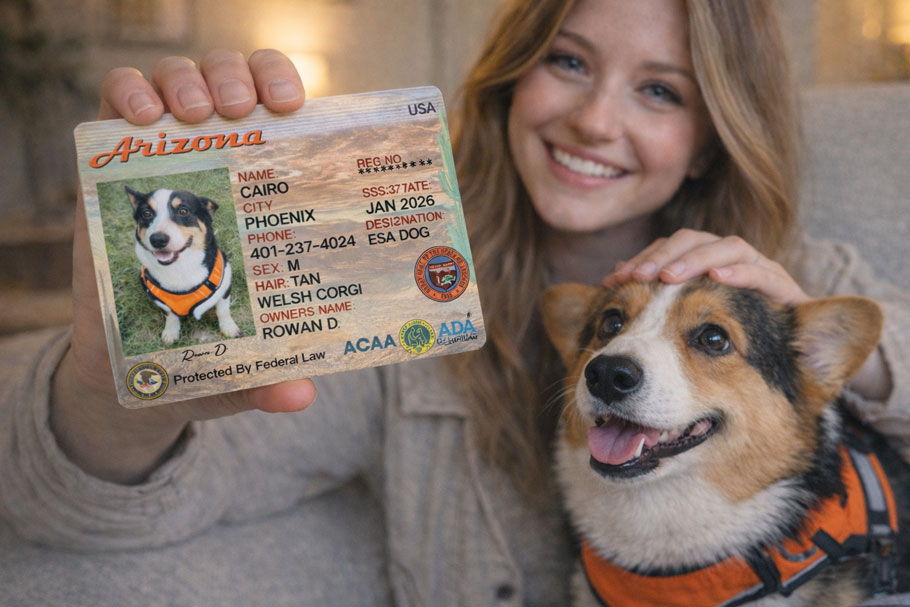
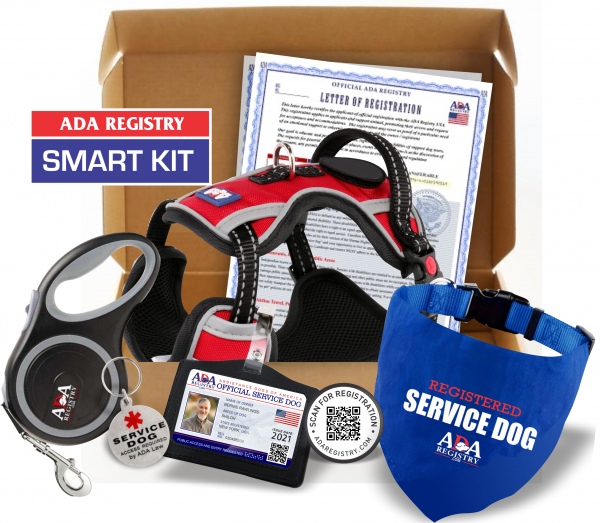
A common myth is that you must register a service dog with the county or buy a special service dog card. In practice, service dog legal status is not created by a Cumberland County dog license. Instead, it comes from disability-related laws that focus on whether the dog is individually trained to perform tasks for a person with a disability.
You can still be required to follow general animal health and control rules
Even if your dog is a service dog, local public health rules (like rabies vaccination requirements) still apply. Service dogs are not exempt from basic safety rules that protect the public, such as vaccination, control/leash requirements where applicable, and rules about aggressive or dangerous behavior.
What you can ask an office (and what to avoid)
Helpful questions to ask Animal Services
- Is a local dog license in Cumberland County, North Carolina currently required for my address?
- What proof of rabies vaccination do you accept for your records?
- If a license/tag is required, how do I obtain it and when is it due?
Avoid paying for “service dog registration” websites
Many third-party sites sell IDs, certificates, or “registrations” that are not issued by the county and do not create legal rights. When in doubt, rely on official county offices and your medical or legal professionals.
Emotional Support Animal Rules in Cumberland County, North Carolina
An ESA is not the same as a service dog
Emotional support animals (ESAs) generally provide comfort by their presence and are supported by clinical documentation in certain housing contexts. ESAs are different from service dogs because they are not required to be trained to perform specific tasks related to a disability.
ESAs typically relate to housing—not public access
If your primary goal is to have an animal accommodated in housing, you usually do not “register” the animal with the county to make it an ESA. Instead, the process commonly involves providing appropriate documentation to a housing provider consistent with applicable fair housing rules. That said, the dog still must follow local public health requirements (like rabies vaccination), and any local licensing rules that apply to all dogs.
What to do if your landlord asks for “registration”
If a landlord asks for an ESA “registration,” you can clarify what they mean. Some landlords are actually asking for rabies vaccination proof or a general pet record. Others may be asking for documentation supporting an accommodation request. When communicating, keep it factual: provide rabies documentation for health compliance and provide appropriate clinical documentation for accommodation requests (if applicable).
Frequently Asked Questions
No. A county dog license (or any animal control record) does not create service dog status. Service dog status is based on disability-related laws and the dog’s training to perform tasks. However, your dog may still need to follow local requirements that apply to all dogs—especially rabies vaccination rules and any current local licensing rules for a dog license in Cumberland County, North Carolina.
Start with Cumberland County Animal Services. They can confirm whether a licensing fee/tag program is currently in effect for your address and tell you what proof (rabies certificate, identification, and other documentation) is needed.
Yes. Rabies vaccination requirements are public health rules that apply regardless of whether your dog is a pet, a service dog, or an ESA. Keep the rabies certificate and tag information accessible because it is commonly needed for local compliance and records.
For local dog licensing or rabies compliance questions, these items are commonly helpful:
- Proof of rabies vaccination (certificate from your veterinarian)
- Your identification
- Proof of residency (if requested for local programs)
- Payment method for any applicable licensing fee
Typically, you’ll want to ensure your rabies vaccination is current and then confirm with Animal Services whether any local licensing/registration is required for your new address. Because rules can vary by jurisdiction and can be updated, calling ahead is the fastest way to avoid unnecessary steps.
Disclaimer
Licensing requirements and office locations may change. Residents should verify details with their local animal services office within Cumberland County, North Carolina.